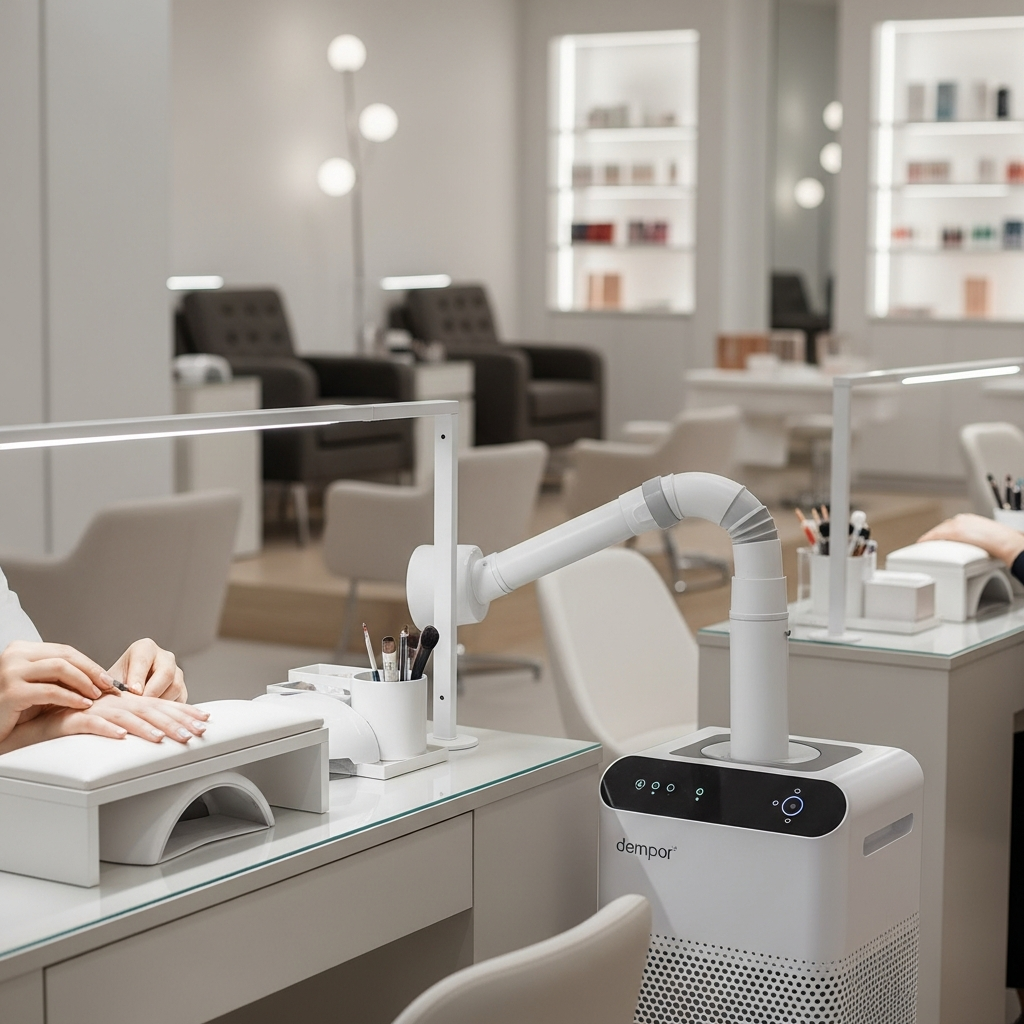
Evaluating Air Purification Systems for Professional Nail Salons
Managing air quality is a primary operational challenge for nail salon owners. Chemical vapors from monomers and fine dust from e-filing require specialized solutions.
General-purpose air purifiers are often insufficient for the high-volume chemical exposure found in professional nail environments. Salon owners must prioritize industrial-grade systems.
Investing in the right ventilation technology protects the long-term health of technicians. It also enhances the client experience by maintaining a neutral-smelling environment.
The Role of Source Capture Ventilation in Nail Services
Source capture systems are designed to extract contaminants at the “breathing zone.” This is the area where the technician and client are most exposed during a service.
These systems use flexible ducts or ventilated nail tables to pull acrylic dust and EMA vapors directly into a filtration unit. This prevents the spread of odors through the salon.
Professional source capture is the most effective way to comply with safety standards. It addresses the pollutants at the point of origin before they disperse into the general air.
Controlling Fine Nail Dust and Monomer Vapors
During the removal of gel or acrylic enhancements, e-files produce microscopic dust. These particles can linger in the salon air for hours if not captured immediately.
A professional system uses high-velocity suction to ensure these particles do not settle on surfaces. This keeps the workstation clean and reduces the risk of respiratory irritation.
Modern units feature adjustable suction speeds. This allows technicians to increase power during heavy filing and lower it during delicate nail art applications.
HEPA Filtration vs. Activated Carbon for Nail Salons
Effective nail salon air purification requires a dual-stage approach. You must address both particulate matter and volatile organic compounds (VOCs) from nail chemicals.
HEPA filters are the industry standard for capturing 99.97% of airborne particles. This includes the fine dust generated during the shaping and buffing of nail enhancements.
For salon owners, the quality of the HEPA filter directly impacts the cleanliness of the facility. Higher-grade filters ensure that even the smallest dust particles are trapped.
Why Activated Carbon is Essential for Odor Control
Activated carbon filters are necessary to neutralize chemical odors. These filters adsorb vapors from nail primers, liquid monomers, and gel cleansers through a chemical process.
For a nail salon, the volume of the carbon canister is critical. A larger weight of carbon ensures a longer lifespan and better absorption of heavy chemical loads.
Without adequate carbon filtration, the smell of acrylic liquid can become overwhelming. This often leads to complaints from neighboring businesses and discomfort for sensitive clients.
Operational Workflows and System Maintenance
Investing in a ventilation system is only the first step for salon management. Managers must implement strict maintenance schedules to ensure the system remains effective.
Clogged filters reduce suction power and increase energy consumption. This leads to poor air quality and potential motor failure in your expensive equipment over time.
Clear maintenance logs help salon owners track filter life. This ensures that the salon always meets professional safety standards and provides a clean working environment.
Filter Replacement and Safety Standards
-
Daily: Clean the intake grilles of desk-mounted units to prevent visible dust buildup.
Monthly: Inspect pre-filters and replace them if they appear saturated with nail dust.
Quarterly: Check the status of HEPA and carbon filters based on your specific service volume.
Ensuring your salon meets local mechanical ventilation codes is vital for compliance. Consult with professional installers who understand nail-specific chemical requirements.
A well-maintained air purification system is a signal of professionalism. It demonstrates to both staff and clients that the salon owner prioritizes safety and quality standards.
