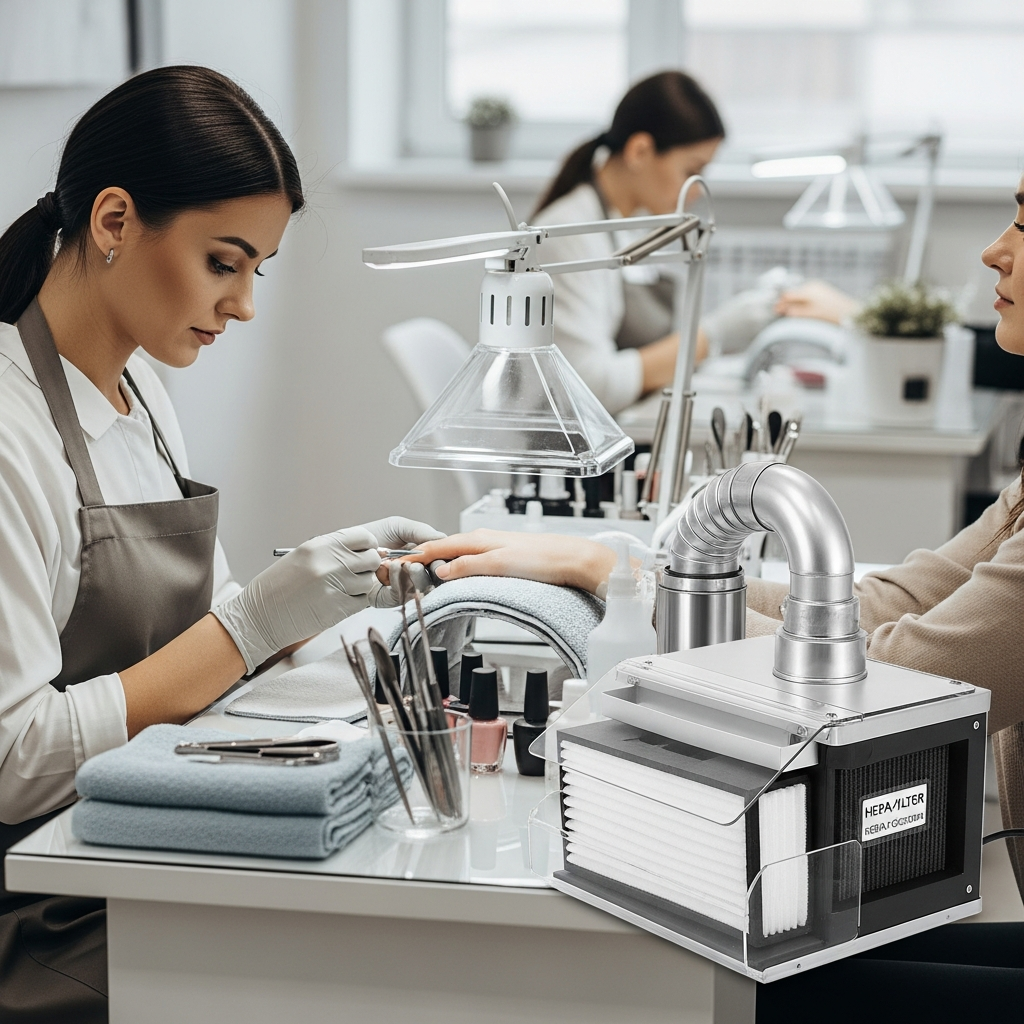
Evaluating Source Capture Exhaust Systems for Nail Salons
Managing chemical vapors and fine particulate dust is a critical operational requirement for modern nail salon owners. Professional source capture systems are designed to remove contaminants at the zone of origin.
These systems specifically target ethyl methacrylate (EMA) monomer odors and cyanoacrylate vapors. Effective capture prevents chemical migration and ensures a professional environment for both technicians and clients.
Selecting the right ventilation solution requires an understanding of airflow dynamics and filtration specifications. This guide evaluates the primary systems used in high-volume professional nail environments.
Comparing Ducted Exhaust and Recirculating Filtration
Local exhaust ventilation (LEV) systems that vent to the outdoors offer the most complete removal of chemical vapors. These systems interface with the building’s mechanical ductwork to expel air directly from the nail table.
Portable recirculating units provide a flexible solution for salons where exterior venting is not structurally feasible. These units use high-capacity filters to scrub the air before returning it to the salon floor.
When evaluating these options, salon owners must consider the International Mechanical Code (IMC) requirements. Many jurisdictions now mandate specific cubic feet per minute (CFM) extraction rates for each nail station.
Critical Filtration Components for Acrylic Services
A professional nail salon air purifier must utilize a multi-stage filtration process to be effective. The first stage should always be a high-efficiency pre-filter to trap heavy acrylic filing dust.
The second stage requires a medical-grade HEPA filter to capture 99.97% of microscopic particles. This stage is vital for protecting technicians from the fine dust generated during e-file manicures and gel removals.
The final and most important stage for odor control is a deep-bed activated carbon filter. This filter must contain a high volume of carbon to chemically adsorb volatile organic compounds (VOCs) and monomer scents.
Operational Impact and Maintenance Workflows
Integrating source capture systems into the nail salon workflow requires consistent maintenance to remain effective. Clogged filters reduce suction power and allow dust to settle on salon surfaces and tools.
Salon managers should implement a weekly inspection schedule for the pre-filter layers. Replacing these inexpensive filters regularly extends the operational life of the more costly HEPA and carbon stages.
Proper positioning of the capture hood is also essential for maximum efficiency. The intake must be placed within six inches of the nail application area to catch vapors before they enter the technician’s breathing zone.
Comparing System Noise Levels and Technician Comfort
High-suction motors can generate significant noise, which may disrupt the professional atmosphere of the salon. Look for systems rated below 55 decibels to maintain a calm environment for client consultations.
Adjustable speed controls allow technicians to increase power during heavy acrylic applications and decrease it during polish services. This flexibility manages energy consumption and reduces unnecessary ambient noise.
Investing in high-quality source capture technology demonstrates a commitment to staff health and safety. These systems are an essential component of professional nail salon risk management and infection control protocols.
Final Considerations for Salon Owners
- Verify CFM Ratings: Ensure the unit provides at least 50 CFM at the point of capture for each manicure station.
- Filter Accessibility: Choose units with tool-free filter access to simplify the maintenance workflow for busy salon staff.
- UL Certification: Only purchase electrical equipment that has been safety tested and certified for professional salon use.
- Carbon Weight: Look for systems with at least 5 to 10 pounds of activated carbon for meaningful monomer odor neutralization.
Proper air quality management distinguishes a premium nail salon from standard competitors. By prioritizing source capture, owners protect their long-term investment in their staff and their facility’s reputation.
