Implementing Professional Sterilization Standards in Your Nail Salon
Establishing rigorous sanitation protocols is a fundamental responsibility for every nail salon owner. Distinguishing between cleaning, disinfection, and sterilization is critical for operational safety.
In the professional nail industry, failing to follow these distinctions can lead to cross-contamination. This guide outlines the necessary systems for maintaining a sterile nail environment.
Understanding Sterilization vs. Disinfection for Nail Implements
Sterilization is the highest level of decontamination, required for all metal nail tools that can pierce the skin. This process destroys all microbial life, including hardy bacterial spores.
Disinfection is the standard for non-porous surfaces and tools that do not penetrate the skin. It involves using EPA-registered, hospital-grade chemicals to kill most pathogens.
Nail salon owners must ensure that every technician understands which process applies to specific tools. Misapplying these standards puts the salon’s reputation and license at risk.
The Role of Autoclaves in the Nail Industry
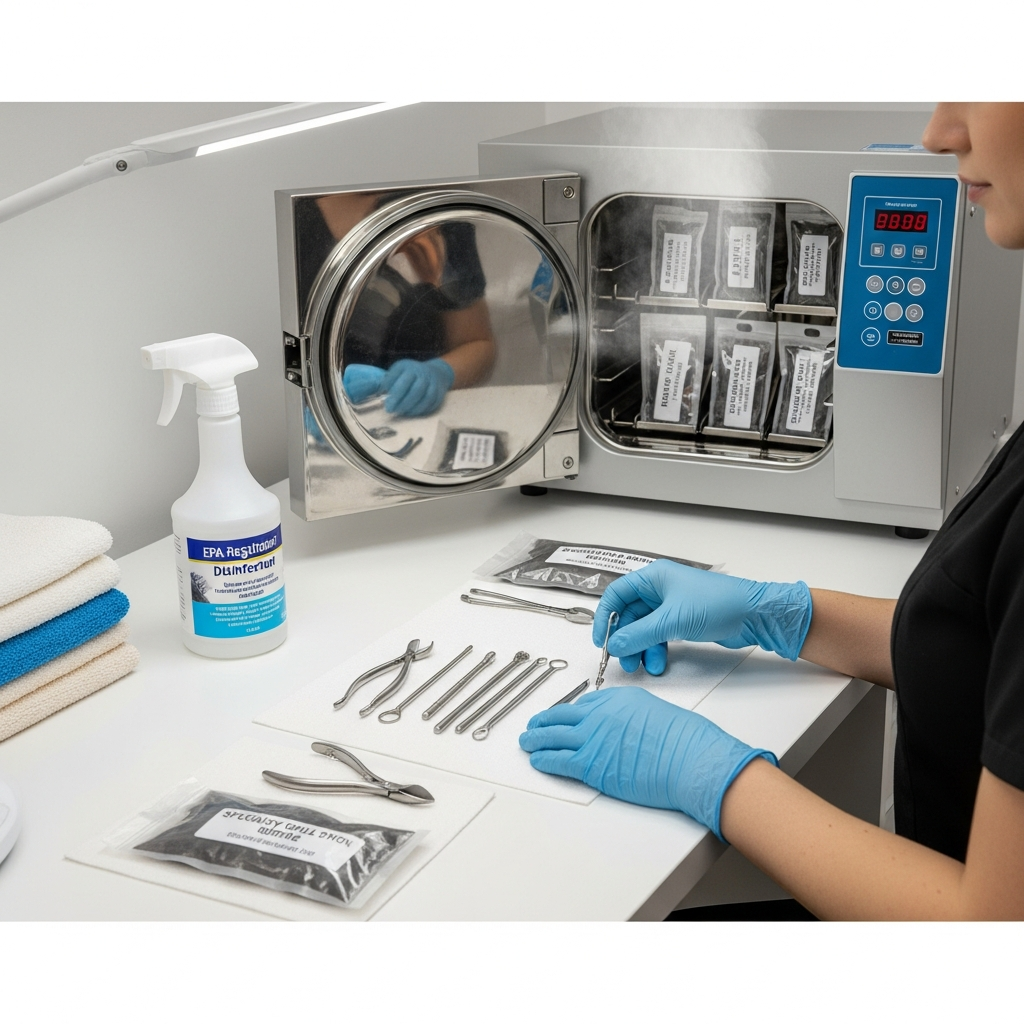
The autoclave is the gold standard for sterilizing metal nippers, pushers, and specialty drill bits. It uses high-pressure saturated steam to achieve total microbial destruction.
Using an autoclave demonstrates a commitment to medical-grade safety that sets a nail salon apart. It is more effective than “dry heat” sterilizers or chemical soaks alone.
Workflow for Sterilizing Metal Nail Tools
- Pre-Cleaning: Scrub implements with a brush and detergent to remove visible nail dust and debris.
- Drying: Ensure tools are completely dry before placing them into sterilization pouches to prevent rusting.
- Loading: Place pouches in the autoclave without overlapping to allow proper steam circulation.
- Verification: Use chemical indicators or spore tests to confirm the autoclave reached the required temperature.
Surface Disinfection Protocols for Nail Stations
The nail table, client armrest, and LED lamps are high-touch areas that require disinfection between every client. These surfaces harbor nail dust, oils, and potential pathogens.
Technicians must use EPA-registered disinfectants with a broad-spectrum efficacy. Always follow the specific “contact time” listed on the product label for it to be effective.
Spray-and-wipe methods are often insufficient if the surface does not remain wet for the required duration. Ensure your nail staff is trained on these specific chemical dwell times.
Management Responsibilities and Safety Documentation
Nail salon owners must maintain detailed logs of sterilization cycles and disinfectant usage. These records are vital during state board inspections and for internal quality control.
Provide technicians with the necessary PPE, such as nitrile gloves, when handling heavy-duty disinfectants. Proper chemical management prevents skin irritation and long-term health risks for nail staff.
Investing in high-quality sterilization systems reduces the long-term cost of tool replacement. More importantly, it ensures a safe environment for both the nail technician and the client.
