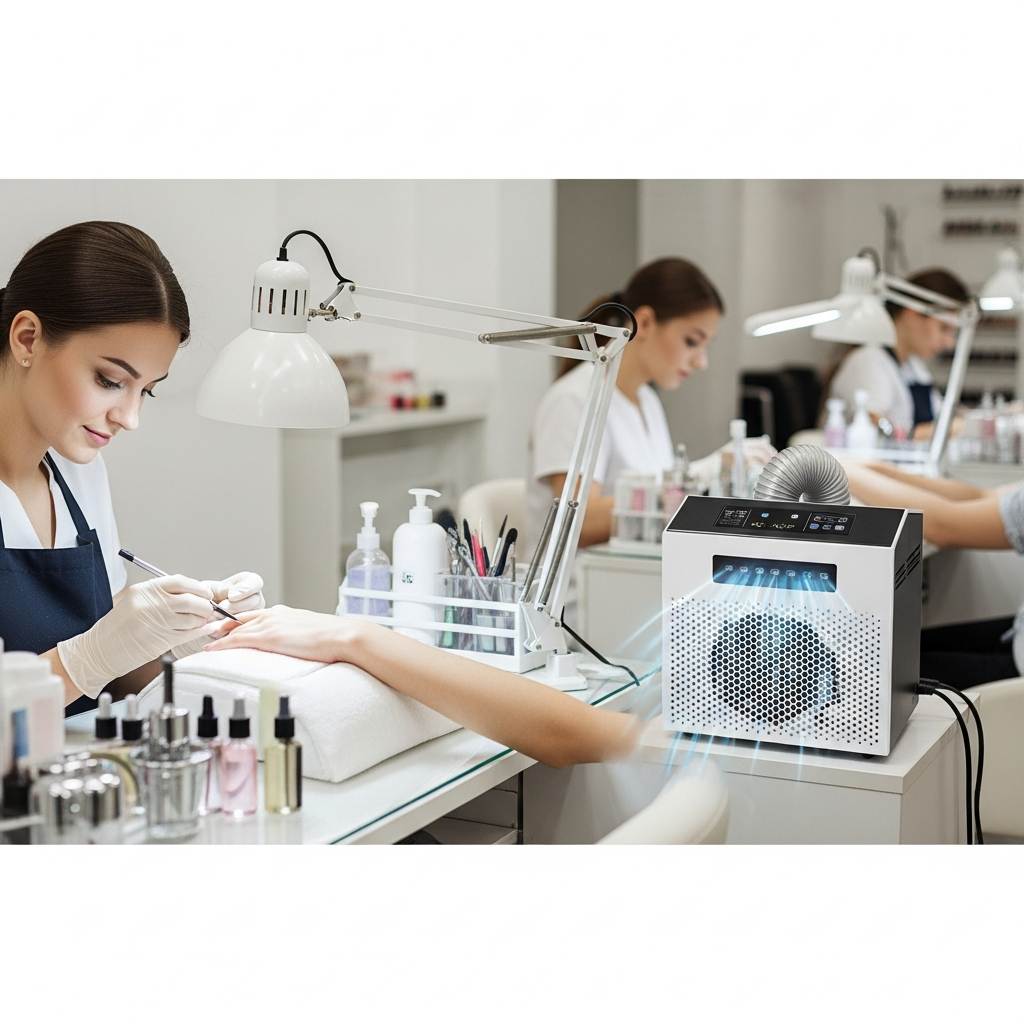
Implementing Professional Air Purification in Your Nail Salon
Maintaining high air quality is a critical operational standard for modern nail salon owners. Professional nail services involve chemical vapors and fine particulate matter that require specialized management.
General ventilation systems often fail to capture the heavy molecules found in nail monomers and cyanoacrylates. This article outlines the essential systems required to protect nail technicians and clients.
Understanding the Risks of Monomer Fumes and Nail Dust
Nail salon environments face unique challenges from Ethyl Methacrylate (EMA) vapors and fine dust generated during e-filing. These substances can linger in the breathing zone of the nail professional.
Long-term exposure to nail dust without proper filtration can lead to respiratory sensitivities for nail staff. Implementing a dedicated system ensures a professional, odor-free environment for your clientele.
Why Source Capture is the Professional Nail Standard
Source capture systems are designed to extract contaminants directly at the nail table before they disperse. This is the most effective method for controlling chemical odors and dust in a busy salon.
- Ventilated Nail Tables: These units pull air down through a localized vent during the application of acrylics or gels.
- Flexible Extraction Arms: These adjustable ducts can be positioned exactly where the nail technician is filing or applying product.
- HEPA and Carbon Integration: Professional units must use a multi-stage approach to handle both particles and chemical vapors.
HEPA Filtration for E-File Dust Management
When using an e-file for removal or shaping, microscopic dust particles are projected into the air. Standard masks are often insufficient for the volume of dust produced in high-traffic salons.
A true HEPA filter captures 99.97% of particles as small as 0.3 microns, which includes the finest nail debris. This prevents dust from settling on salon surfaces and entering the HVAC system.
Activated Carbon for Chemical Odor Control
The “nail salon smell” is primarily caused by evaporating monomers and adhesives. Activated carbon filters are necessary because they use adsorption to trap chemical molecules within the filter media.
For a nail salon owner, choosing a system with a deep-bed carbon filter is essential. Thin carbon pre-filters are usually insufficient for the concentrated chemical load of a professional nail environment.
Maintenance Workflows for Salon Air Systems
To remain effective, nail salon air systems require a strict maintenance schedule. Clogged filters reduce suction power and increase the strain on the extraction motors.
- Daily Cleaning: Wipe down intake grilles to prevent the buildup of larger nail clippings and debris.
- Monthly Inspections: Check pre-filters for dust saturation and replace them to extend the life of the HEPA filter.
- Quarterly Replacements: Most high-volume nail salons should replace carbon filters every 3 to 6 months to ensure maximum odor neutralization.
Investing in high-quality air purification demonstrates a commitment to professional standards and safety. It protects your most valuable assets: your nail technicians and your business reputation.
