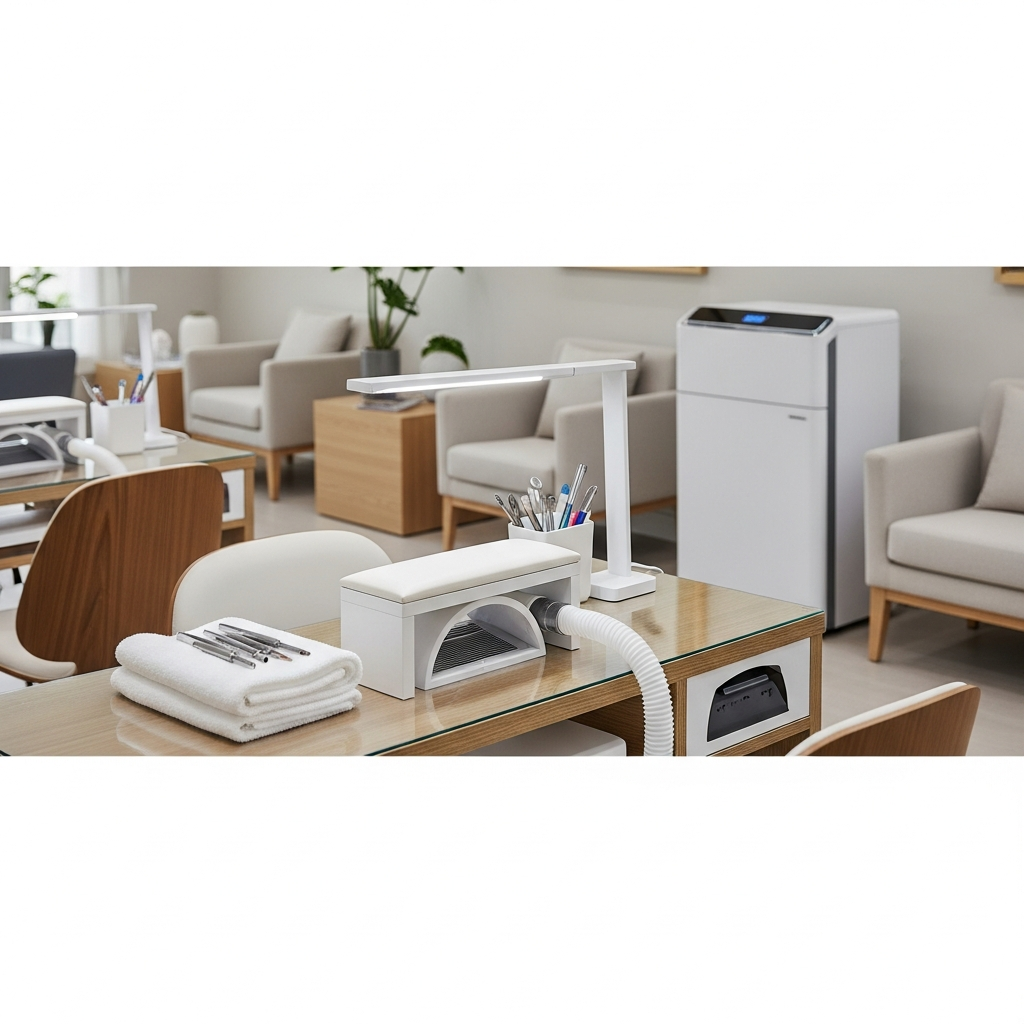
Comparing Professional Chemical Odor Control Solutions for Nail Salons
Managing chemical odors is a critical operational challenge for nail salon owners.
Effective odor control focuses on removing volatile organic compounds (VOCs) and monomer vapors.
Maintaining clean air protects the health of nail technicians and improves the client experience.
Source Capture Systems vs. Ambient Air Filtration
Nail salon owners must distinguish between source capture and general air purification.
Source capture systems sit directly at the nail table to extract vapors at the point of origin.
These units are the most effective way to prevent EMA monomer odors from spreading.
Ambient air purifiers treat the air throughout the entire salon space.
While helpful for general air quality, they often struggle with heavy chemical loads.
The most successful salons typically use a combination of both technologies for maximum safety.
Evaluating Activated Carbon Filtration Capacity
The core of any nail salon odor solution is the activated carbon filter.
Not all carbon filters are equal when handling professional nail chemicals.
Look for systems with heavy-duty carbon beds specifically treated to absorb acrylic vapors.
Filter Thickness and Weight
A thin carbon pre-filter is insufficient for high-volume nail services.
Professional-grade systems utilize several pounds of carbon to ensure long-term effectiveness.
Heavier filters require less frequent replacement, reducing long-term operational costs for the owner.
Chemical Adsorption Rates
Ensure the system is rated for the specific chemicals found in nail products.
Professional systems should target ethyl methacrylate (EMA) and cyanoacrylates.
High adsorption rates prevent the “re-release” of odors during busy salon hours.
Operational Impact of Air Ventilation Systems
Investing in high-quality odor control affects more than just the smell of the salon.
Reduced chemical exposure leads to fewer sick days and higher staff retention rates.
Technicians working in a clean-air environment report less fatigue and fewer headaches.
Improving Client Retention
First impressions are vital in the competitive nail industry.
A salon that smells like heavy chemicals can deter high-end clientele.
A neutral-smelling environment signals a commitment to professional standards and hygiene.
Compliance with Ventilation Codes
Many jurisdictions now require specific mechanical ventilation for nail salons.
Source capture systems often help owners meet or exceed local building and safety codes.
Consulting with a nail industry specialist ensures your equipment meets these regulatory demands.
Key Features for Salon Owners to Compare
- Noise Levels: Choose systems that operate quietly enough for conversation during nail services.
- Footprint: Ensure source capture units fit comfortably under or beside the nail station.
- Maintenance: Look for easy-access filter compartments to minimize downtime during changes.
- Airflow (CFM): Verify the cubic feet per minute (CFM) is high enough to pull vapors away from the technician’s face.
Selecting the right chemical odor control solution is a strategic business decision.
Prioritize systems that offer high-capacity carbon filtration and targeted source capture.
This investment ensures a safer, more professional, and more profitable nail salon environment.
