Implementing Professional Disinfection Systems in Nail Salons
Nail salon owners must prioritize advanced disinfection systems to ensure the highest level of safety for both technicians and clients.
Implementing a standardized protocol for tool and surface sterilization is essential for regulatory compliance and infection control.
Professional nail environments require specific systems designed to neutralize pathogens common in manicure and pedicure services.
Choosing EPA-Registered Hospital-Grade Nail Disinfectants
The foundation of any nail salon safety system is the use of EPA-registered, hospital-grade disinfectants.
These chemicals must be bactericidal, virucidal, and fungicidal to address the risks associated with nail service tools.
Owners should select solutions specifically formulated for non-porous nail implements like metal nippers and steel pushers.
Key requirements for chemical disinfection include:
- Full immersion of cleaned, non-porous nail tools.
- Strict adherence to the manufacturer’s required contact time.
- Daily replacement of disinfectant solutions to maintain chemical efficacy.
Managing Non-Porous vs. Porous Nail Tools
A critical component of a nail salon’s disinfection system is the proper categorization of implements.
Non-porous tools, such as electric file bits and glass files, must undergo a complete immersion cycle after every nail service.
Porous items, including wooden cuticle sticks and certain nail buffers, are single-use only and must be discarded immediately.
Advanced Sterilization Systems for High-Volume Nail Salons
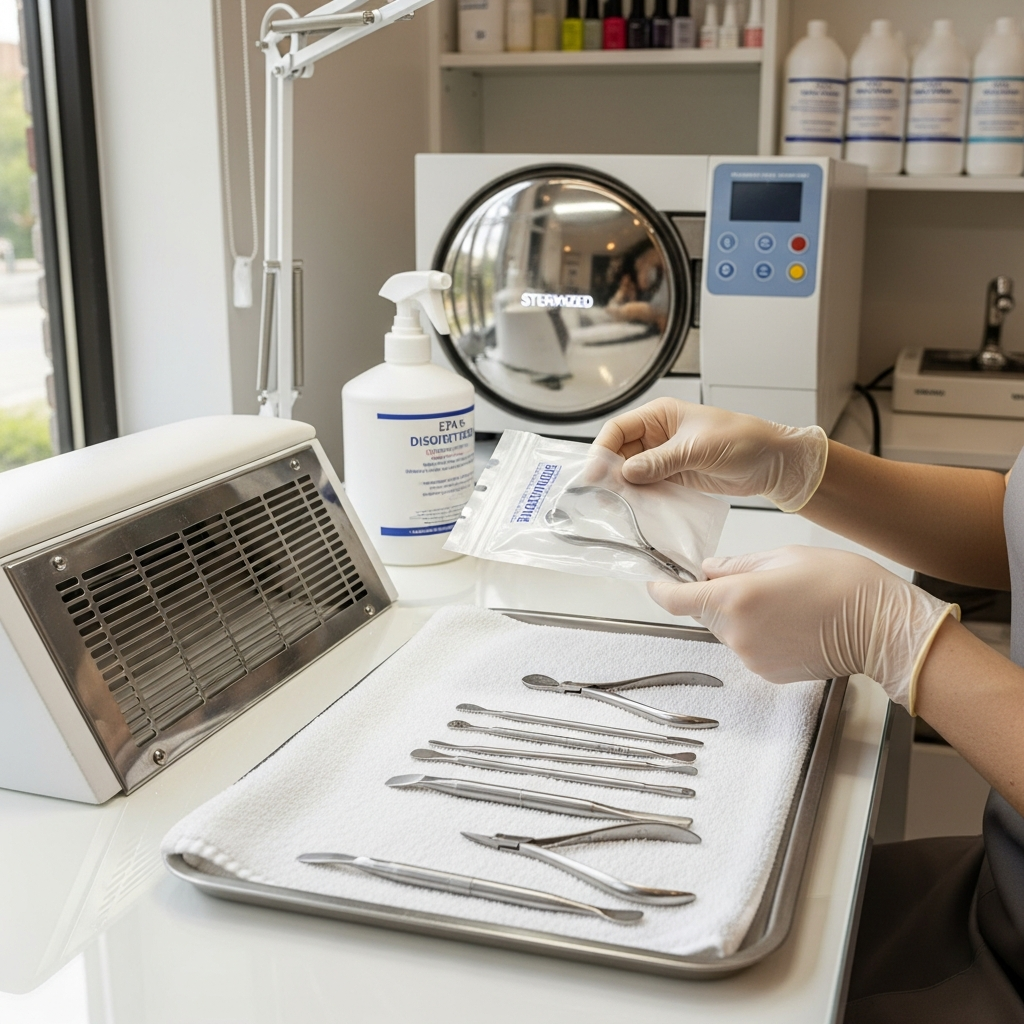
For high-traffic nail salons, moving beyond liquid disinfection to autoclave sterilization provides the gold standard in safety.
Autoclaves use pressurized steam to kill all microbial life, including highly resistant bacterial spores.
This system is increasingly preferred by senior nail staff to ensure the absolute sterility of metal manicure sets.
Operational benefits of autoclave systems:
- Provides verifiable sterilization through chemical indicator strips.
- Extends the life of high-quality stainless steel nail nippers.
- Builds client trust by using individual sterile tool pouches for every service.
Maintenance of Nail Tool Sterilization Equipment
Owners must implement a strict maintenance schedule for all sterilization hardware used within the nail salon.
Regular spore testing is required to verify that the autoclave is reaching the necessary temperature and pressure levels.
Nail salon managers should maintain a detailed log of these tests to present during state board inspections.
Establishing Professional Sanitation Workflows
A systematic workflow is necessary to prevent cross-contamination between nail stations and pedicure thrones.
Technicians must clean all surfaces with a professional-grade nail surface disinfectant between every client appointment.
This includes the nail lamp, armrests, and the technician’s workspace where nail dust accumulates.
Essential steps for nail station sanitation:
- Remove all visible nail debris and dust from the work surface.
- Spray and wipe the station with an approved nail industry disinfectant.
- Ensure the chair and client-facing equipment are treated before the next service.
Protecting the Nail Technician and the Client
The disinfection system must also address the health of the nail professional through proper chemical handling.
Safety Data Sheets (SDS) for all disinfection chemicals and nail monomers must be easily accessible at all times.
Providing technicians with appropriate personal protective equipment ensures safe interaction with high-strength cleaning agents.
By integrating these professional systems, nail salon owners create a safer, more efficient, and highly reputable business.
Superior sanitation standards are not just a legal requirement but a hallmark of a premier nail industry establishment.
Consistent application of these protocols ensures the longevity of the salon and the health of the community.
